Rising up off the bottom rung – working class loyalists are fighting the wrong enemy
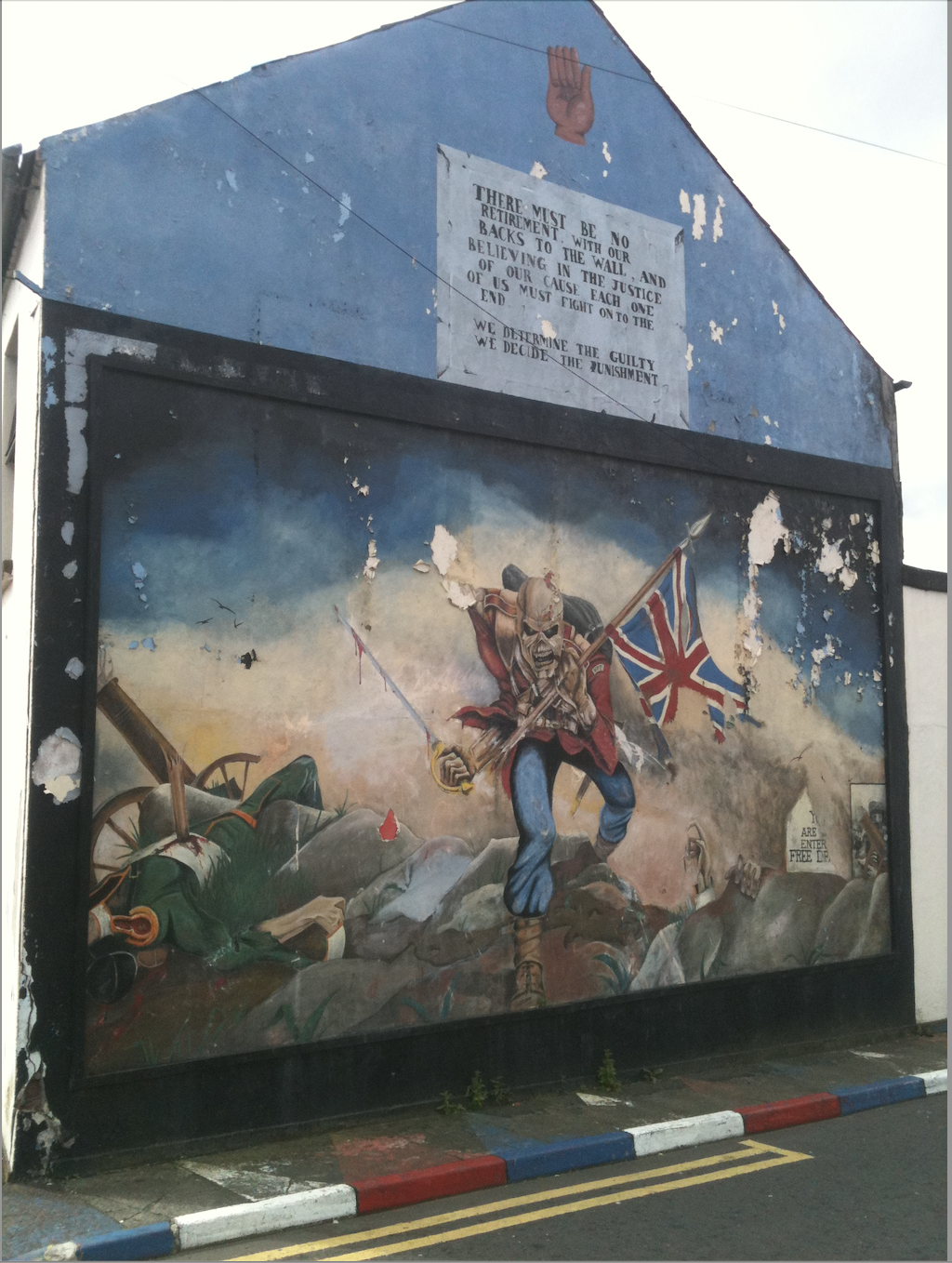
For generations, working-class communities across Northern Ireland have faced many of the same challenges: low wages, insecure employment, poor housing, educational disadvantage and the feeling that decisions affecting their lives are made somewhere else by people who neither know nor understand them.
Historically, many of these experiences were associated with Catholic communities. Increasingly, however, they are also features of life in many Protestant working-class areas. Economic insecurity does not recognise religious boundaries. Nor does social exclusion.
This is why recent scenes of hostility towards migrants have been so depressing. They represent a tragic misunderstanding of where the real problems lie.
Most of the people who have come to these islands in recent years are not fuelling the fires of division. They are ordinary workers struggling to put bread on the table. They staff our hospitals, drive our buses, care for our elderly, deliver our food and help sustain businesses that struggle to recruit locally. They arrived looking for the same things that generations of Irish people sought abroad: security, opportunity and a better life.
Unfortunately, for a variety of reasons, including the cost of accommodation in present-day Belfast, many migrants have found themselves living in or alongside loyalist working-class communities. In theory, that should not be a problem. After all, the Britain to which loyalists profess loyalty is now a highly diverse and multi-ethnic society. Some of these migrants have come from Commonwealth countries. Others have come from places shaped by conflicts, economic upheaval or the lingering shadow of Western foreign policy.
Like working-class loyalists, migrants understand economic insecurity. Both groups know what it feels like to be looked down upon. Both have experienced the frustrations of living in places that seem forgotten by policymakers and overlooked when the so-called peace dividend was distributed, either in Belfast or their home countries.
Yet instead of recognising common interests, a small but vocal minority continues to encourage the idea that migrants are somehow responsible for decades of social and economic decline. They are not.
The collapse of Belfast's historic industries was not caused by migrants. Educational underachievement was not caused by migrants. Housing shortages, hospital waiting lists and chronic underinvestment in many working-class communities were not caused by migrants.
These problems existed long before recent migration. For much of Northern Ireland's history, working-class Protestants were encouraged to define themselves in relation to those beneath them rather than those above them. As long as their position remained marginally better than that of their Catholic neighbours, many accepted a political and economic settlement that often delivered little in return.
There is an uncomfortable truth here. Too often, sections of unionism were encouraged to believe that their greatest achievement was not prosperity, power or progress, but simply being one rung higher on the ladder than somebody else.
Today there is a danger that the same logic is being redirected. The target has changed, but the message remains familiar: blame those with even less power than yourself. As long as you are not at the bottom, everything is fine.
But that approach has never improved anyone's life. The Labour movement has always understood this. Some loyalists understood it too. David Ervine's politics were rooted in the belief that working-class communities could not build a future through permanent grievance. His vision was imperfect in pure socialist terms, but it recognised something essential: solidarity creates opportunities that division never can.
Trade unionism also emerged from the recognition that workers are strongest when they act together rather than compete against one another. It recognised that employers, governments and economic systems benefit when working people are divided by religion, nationality or ethnicity. The future of Ireland, North and South, and whatever emerges in growing closeness between the two, has to be one that transcends manufactured division.
That does not mean ignoring legitimate concerns about migration, public services or integration. Those are real issues that deserve serious discussion. But they cannot be solved by turning workers against workers or neighbours against neighbours. And definitely not by burning Glider buses and driving poor black nurses out of their homes.
A new Ireland cannot be built through imported culture wars that encourage struggling communities to see one another as enemies. A new state of solidarity needs to be established.
That though will only be built when people recognise a simple truth: the person beside you on the hospital ward, the building site, the factory floor or the delivery route is far more likely to share your struggles than threaten your future, regardless of the colour of their skin, their accent or where they were born. And the fact that such prejudices are shaping so much of what is happening now also definitely should not put Irish unity on the back burner.
One of our members, Shane Cahill, recently put it succinctly: “Poorly managed immigration issues are not an argument for partition. Quite the opposite. They are an argument for reunification.”
The challenge facing working-class communities is not whether change can be stopped. It cannot. The challenge is whether that change can be shaped collectively and fairly.
We should aspire to an Ireland built on unity, solidarity and community. Not an Ireland of competing grievances. Not an Ireland where people's ambitions extend only to being one rung above the least fortunate.
For too long, snake-oil salesmen have convinced sections of loyalism that their highest station in life is to avoid being situated at the very bottom of the social ladder. Surely that is a game that has run its course. The future of working-class communities does not lie in division, resentment or the politics of permanent anger.
Their future lies in solidarity, rather than the ridiculous belief that it’d be better to burn the house down than share it. It really wouldn’t and it wasn’t this week in Belfast buses and houses were burning in a rage foolish as that of wasps setting fire to their own nests.
